
Beyond the Hype: Why Construction Needs Real Infrastructure Digital Twins

Let’s be honest: construction has never had a shortage of data. The real issue has always been that the data is trapped in silos, hidden behind fragmented workflows, or locked in systems that don’t talk to each other.
That’s why the industry is starting to look past static reports and toward operational digital twins. But a digital twin shouldn’t just be a flashy 3D model that sits on a screen. If it doesn’t solve a tangible operational problem on the ground, it’s just digital noise.
What Does a Practical Digital Twin Look Like?
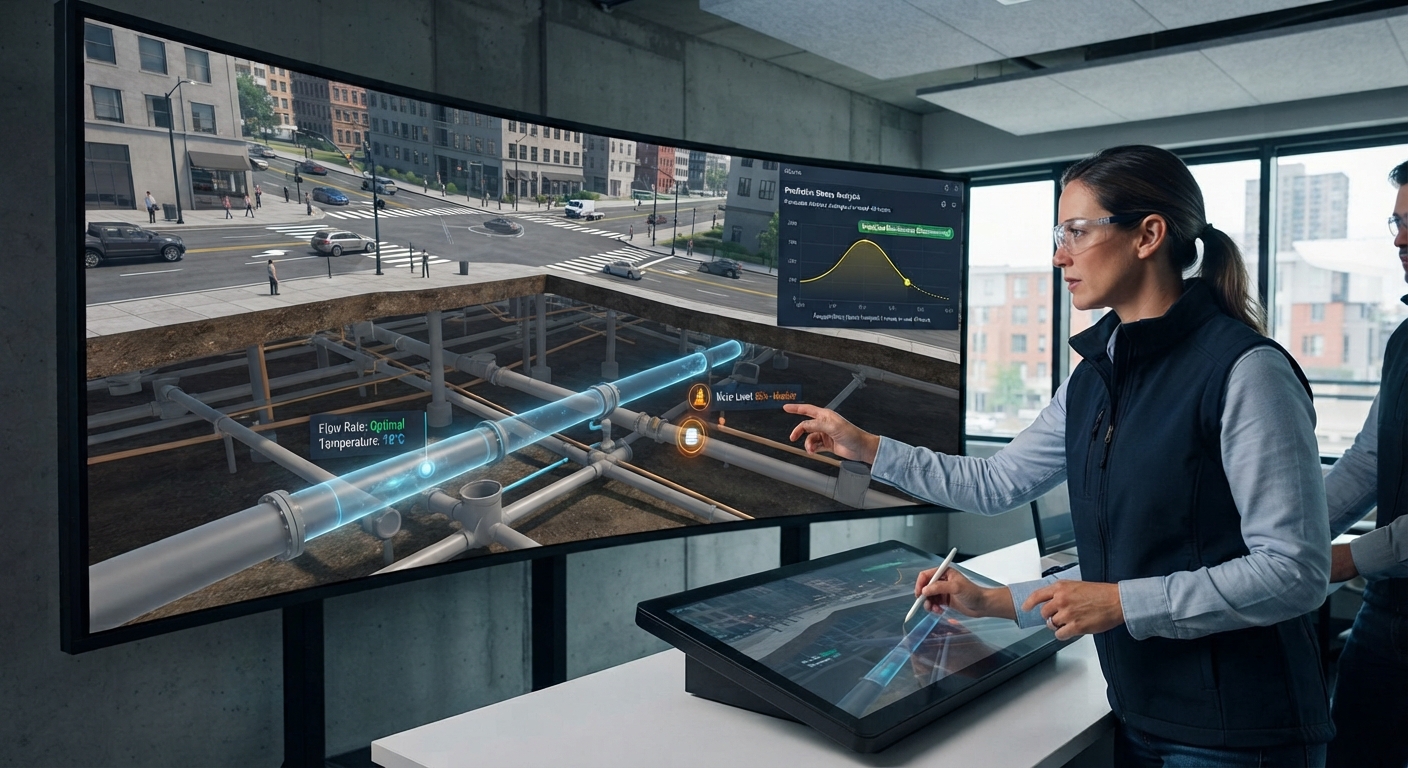
At its core, a digital twin is simply a virtual mirror of physical assets. In civil engineering and utilities, that means mapping real-world infrastructure like road networks or complex underground sewer systems.
When it’s built properly, it stops being a passive blueprint. By feeding live sensor data into the model, teams get actual visibility over performance and wear-and-tear—helping cut through the guesswork that eats away at margins.
Moving From Reactive to Predictive
The real shift happens when you layer sensible forecasting on top of that data. Instead of waiting for a pipe to fail or a road section to degrade beyond repair, predictive scenarios let teams simulate future stress points.
Off-the-shelf software often forces your business to bend to fit someone else’s template. Real operational control means having tools built specifically for how you work.
If you’re at UK Construction Week, come find our team at Stand H15 to see our live road and sewer network digital twin demo in action. Let’s have a proper chat about how you’re tackling visibility on your projects.